Level and World Design as a GM
I’ve been my DnD group’s game master for a few years now, and it’s been refreshing to practice skills in game design, world building, and improv while I spend time with several friends who build their own unique characters that have to fit into the world we create together. Sometimes it leads to a brilliant comedy of errors, and other times it leads to heartfelt moments, but every time I sit down to play, it helps me refine tools and techniques to use as a game designer.
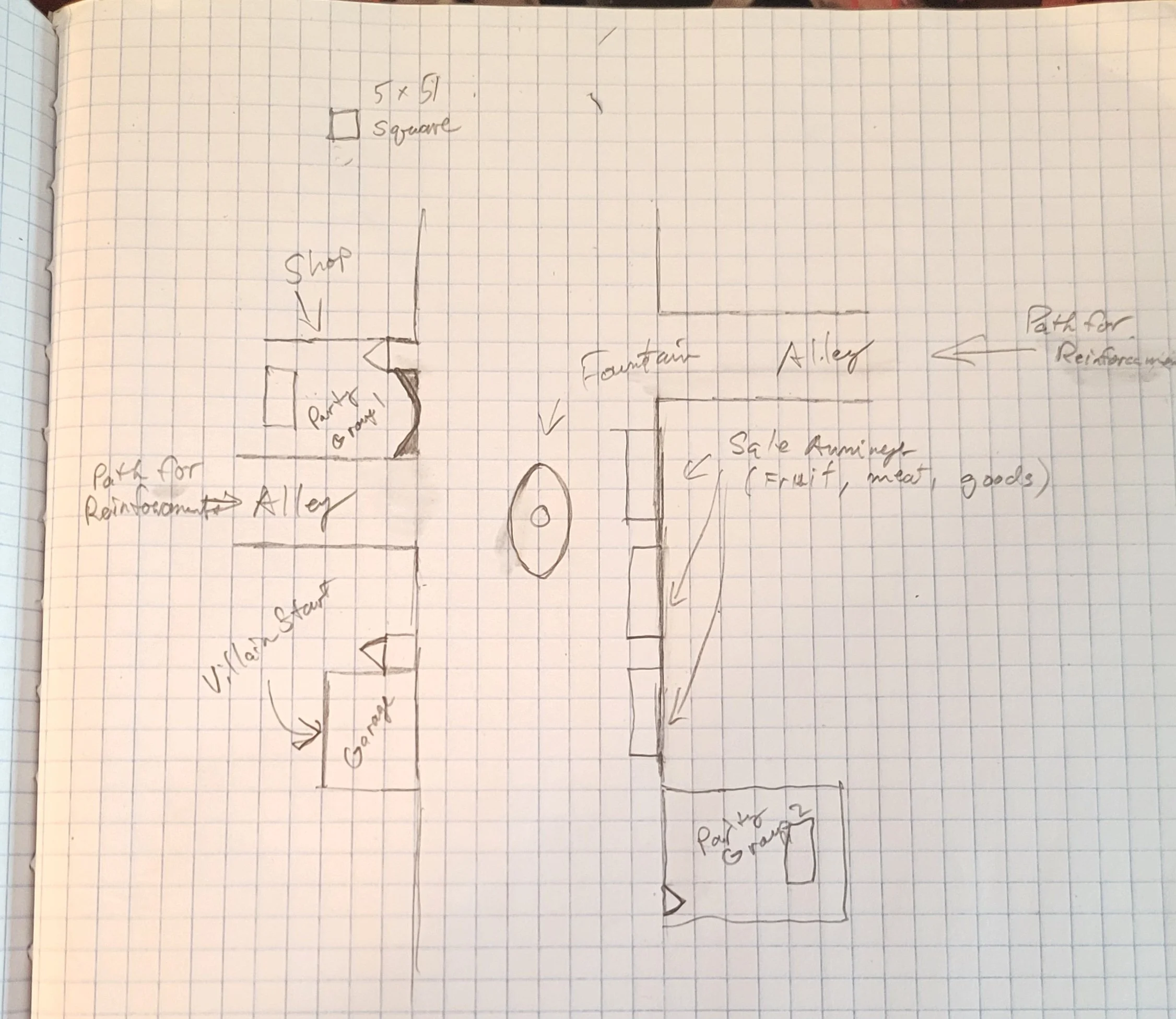
When building a combat space, I usually start with a layout in my notebook. The notebook will usually have the basic structure of the playspace, along with notation for what each part of the structure is for as a part of the world. “Is this blocking element a fountain or statue? Is this open area an alleyway with garbage bins or a liminal space with many “doors to elsewhere?””
While generic combat arenas are absolutely an option, most places that players enter into combat will have concrete details that allow me to fill out the space with information on the world they inhabit, or quietly nudge players toward creative solutions that I had in mind to make the world a little more interactive, or even engage with the setting on their own terms and insert their own creativity in a way that I get to enjoy and develop further with improv and later followups.
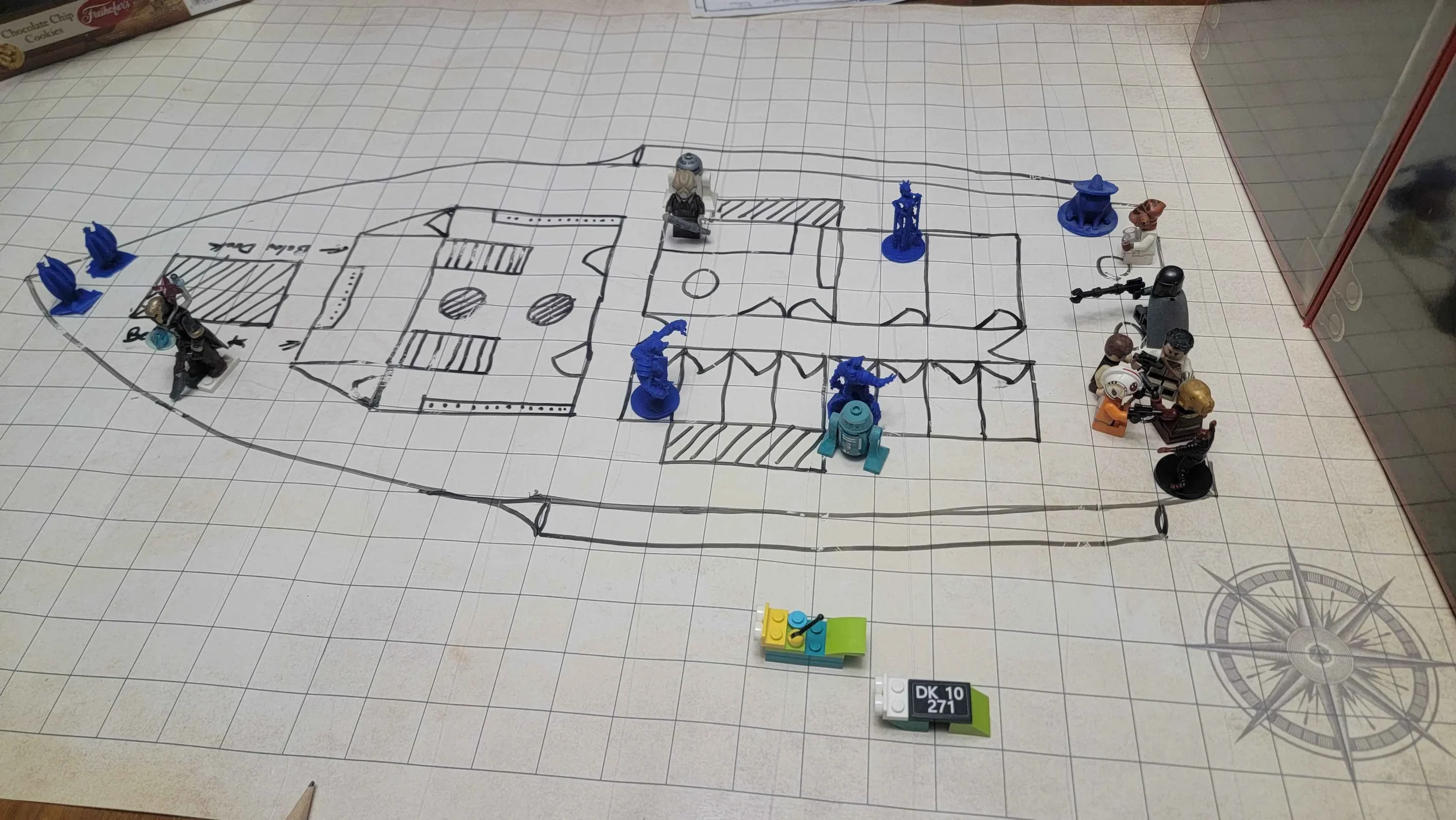
Once the layout is determined and translated to the battlemap, I then plan and place the cadre of NPCs the players will have to engage with, from enemies, secret allies, to neutral figures. Enemy NPC construction is always fascinating as a corollary to the level design, as I get to ask myself questions like, “What is this character going to have as a member of a Devilish gang?” or, “What would be a very effective tool for an anti-magic capture team?” and, “How would these NPCs coordinate their movements to display their characterization?”
Similar to character animations in a video game, or the flavor that embodies a character’s description, an NPC’s loadout and behaviors in combat can offer quite a bit to the players regarding their characterization: what kind of person they are, what training they’ve had (or lack), and what they intend to do after combat is over. “Secret Allies” can be an equally fun to design and play with as a GM, since often times the players (and on occasion I myself) will underestimate the ability for an NPC to contribute to their side in a battle.
All of this work intersects with and contributes to the world that the players are taking their journey through.
The picture above (the layout of a boat) reflects the choices the players made to take a boat upriver, rather than journey by horseback or dirigible, and the players performed exceptionally well in this combat, meaning that they saved the boat and didn’t have to evacuate to the banks, where they could have ended up on the wrong side of the river. Much of what happens is planned in some capacity, but the details make for unusual twists and turns as the players engage with different components and make their choices.
Being a GM for highly creative players is exciting every time I sit down at the table, and I hope to continue for many more years building worlds and stories for them to enjoy.
